
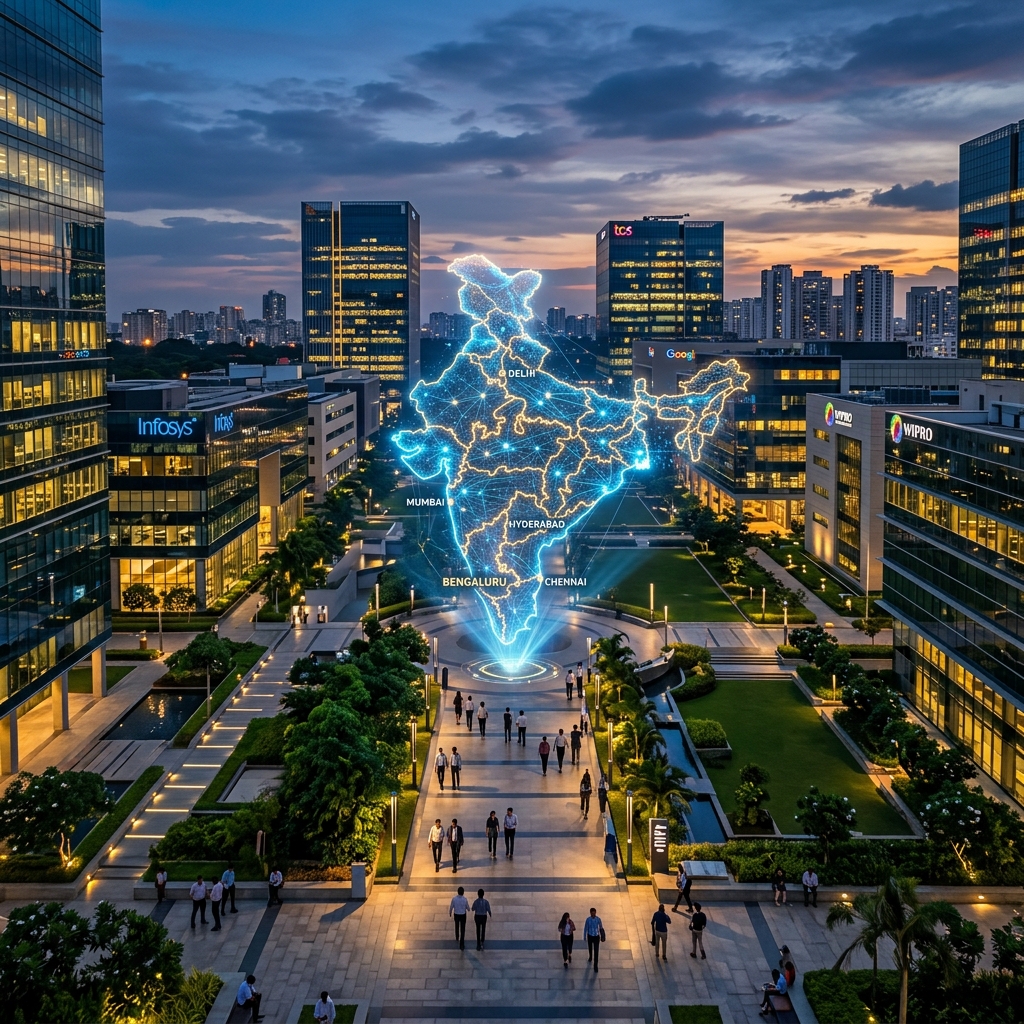
India has solidified its position as the primary engine of global economic growth, registering a spectacular 7.8% year-on-year GDP expansion in the fourth quarter of the financial year 2026. Data released by the National Statistical Office (NSO) shows that the expansion was propelled by robust domestic demand, a manufacturing boom powered by the Production Linked Incentive (PLI) schemes, and the rapid digitization of public services.
The Manufacturing Renaissance
The manufacturing sector grew by 10.4% in Q4, reflecting the success of India's import substitution and export promotion campaigns. Electronics, defense manufacturing, and electric vehicle production witnessed the highest capital inflows. The 'Make in India' initiative has evolved to draw major global corporations to set up massive fabrication and assembly facilities across Tamil Nadu, Gujarat, and Maharashtra, turning India into a key global export hub.
Digital Public Infrastructure (DPI) Accelerates Trade
India's digital public infrastructure, built on UPI, ONDC, and India Stack, has unlocked massive efficiency gains in domestic trade. Small and medium enterprises (MSMEs) can secure credit in minutes using digital footprint data. Direct benefit transfers (DBT) have eliminated leakages in rural support programs, enhancing rural purchasing power. The rise of ONDC has democratized e-commerce, allowing local retailers to compete on equal terms with global conglomerates.
Services Sector and AI Startup Boom
The services sector, traditionally India's strong suit, maintained a growth rate of 8.2%. Financial services, software engineering, and consulting saw massive international demand. Significantly, India's AI startup ecosystem has exploded, attracting over $8 billion in venture capital in the first half of 2026. Startups are focusing on localized AI solutions in healthcare, agriculture, and languages, creating thousands of high-skilled jobs in tech hubs like Bengaluru, Hyderabad, and Pune.
Inflation Management and Future Outlook
The Reserve Bank of India (RBI) successfully kept consumer price inflation within its target band of 4% plus/minus 2%. Economists predict that the combination of fiscal discipline and capital expenditure on highways, railways, and ports will sustain India's growth trajectory above 7% throughout the rest of 2026 and 2027.